Tag: Self

  • How I Discovered Yoga and Why I Do It Everyday

    How I Discovered Yoga and Why I Do It Everyday

    For me, yoga started as a fitness activity. Every week, I had a two different workout routines I would do which I would break up with one or two yoga classes in between. A couple of events over the course of 2018 is what led me deeper into the practice, ritual, and attitude of yoga.

    When the year began I was halfway through Leadership Austin’s Emerge program. The training was focused on understanding and exemplifying your values. Identifying my personal values was further cemented by the book I was reading, “The Subtle Art of Not Giving a F***”, by Mark Manson (Great read btw, highly recommend to anyone and everyone). I clearly identified my values into the three categories that are the theme of this site:

    • Self – what am I doing to make myself better
    • Service – what am I doing to serve others and the world around me
    • Social – deepening relationships and spending quality time with others (I’m an extrovert)

    On March 19th I turned thirty years old and anyone who tells you that things don’t change at milestone birthdays has either already changed or might never change. When there is a new number in front of your age, you think differently. The high of my birthday was quickly numbed when I was faced with a tough decision and left one of my main areas of service, my job of the last one a half years.

    This brought my values to the forefront. To ensure that they stayed there, I began keeping a daily catalogue of activities in each category. This exercise self-awareness led me to eating a better diet, riding my bike more often and attending more yoga classes. Through the extreme kindness of a friend and possibly some divine intervention, I was gifted a membership at a local studio where I quickly realized that yoga was not just a fitness activity that grouped into my “self” improvement bucket each night, it was a special thing that fit into every bucket.

    Every day I would ride my bike to a class that my friend was teaching. This not only gave me a chance to see her but through the practice of dedication that comes with yoga, also felt as if I was supporting her. She soon began to introduce me to others in the studio and feel welcome in the community. Trusting in the positive feelings it provided me, I am now taking the next step doing teacher training with 20+ other yogi’s that are as interested in their practice as me. Is Yoga a social activity for me? Mmhmm.

    While it was nice having a flexible schedule, there was a lot of stress and discomfort that came with looking for new opportunities. In the beginning, I was beaten down and began to surround myself with unnecessary negative talk. There was a significant improvement in my success pursuing my value of service tied the distinct time I started practicing every day. By September, I had three unique and promising opportunities and eventually decided to join one of the top technology companies in a sales role that I had always desired. It’s hard for me to deny that one didn’t influence the other, practicing every day provided me with stress relief and allowed me to realign my mindset.

    While Yoga has always been a physical activity to improve my health, CorePower workouts embody everything that I want in a workout; cardio, strength training, and cool down/reflection, all while getting a really good sweat in. Yoga is also more than something you do, similar to snowboarding (one of my other all-time favorite activities), it is something that you can get better at. Contrary to other sports, my experience is that the better you get at yoga, the harder it gets. Every time I feel as though I am plateauing, I make a slight adjustment here or a breakthrough somewhere else and am humbled to feeling novice again. Participating in a class with others and an amazing teacher also motivates you to work harder. I am in the best shape of my life and feel more optimistic about my long-term health thanks to yoga.

    For me Yoga is an activity that fuels the most important aspects of my life and has led me significant joy.
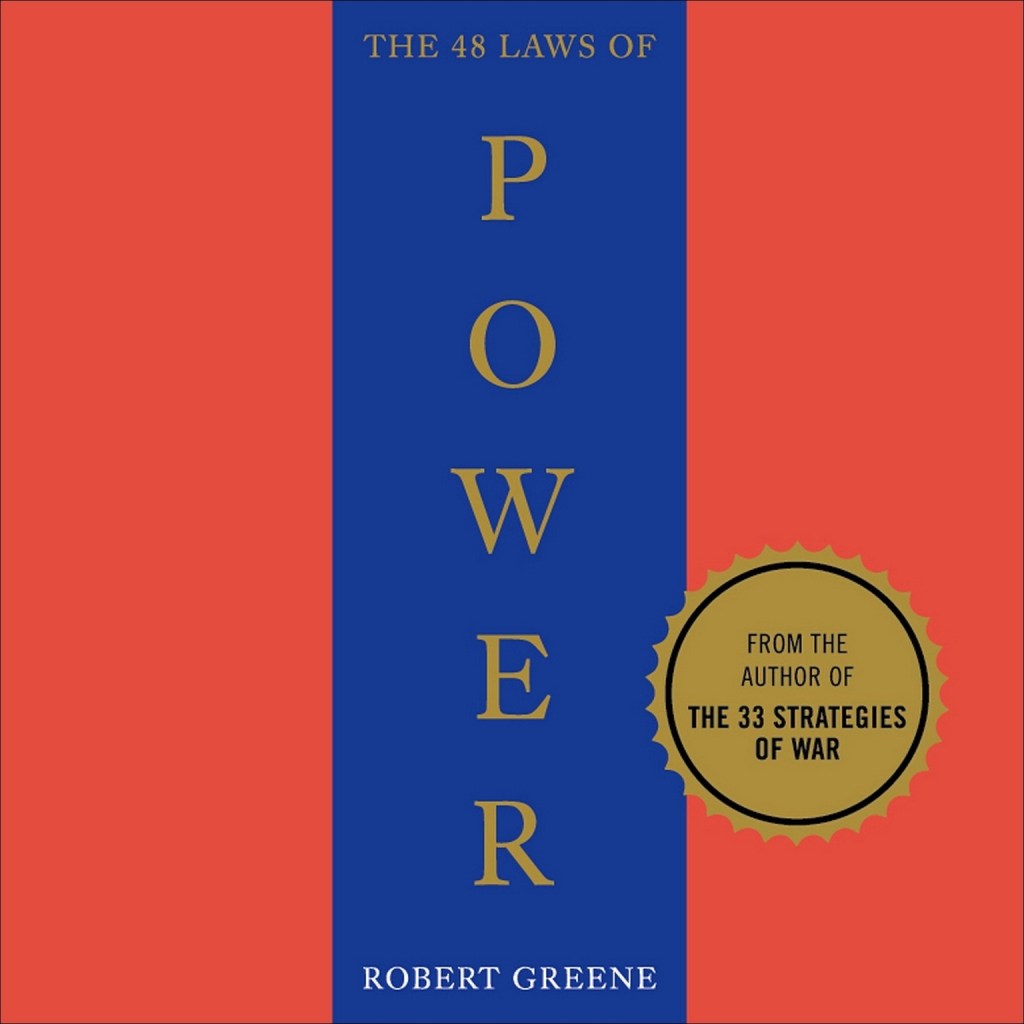

  • My Favorite Books – 48 Laws of Power

    My Favorite Books – 48 Laws of Power

    By Robert Greene
    Published 1998 

    This book was recommended to me by a co-worker and then re-recommended to me by that same co-worker repeatedly after several transgressions of the lessons highlighted in this work. Since then, there is no other book that I have lent out or bought for others more than Robert Greene’s 48 Laws of Power.

    Often described as a Machiavellian bible or modern version of The Prince, Robert Greene focuses this book through the lens of power. Observing different tactics and techniques from power elites while working in Hollywood, he references his degree in classical studies to provide a guide for power based on stories of famous historical figures and strategists over the last 3,000 years. Each law has it’s own chapter, which provides a summary of the law, followed by a “transgression” (where someone went wrong), “observance” (effective use of the law), the “keys to power” (how to apply the law), and a “reversal” (situations where it might not apply). Each chapter also features additional stories, poems, or notes in the side columns related to the law.

    I was reluctant to read the book because it seemed very cynical to me, some of the laws are cutthroat and downright sociopathic (“What do you mean I shouldn’t trust my friends? Why would I try to deceive people”). As I read through it I realized that this book serves as a shield rather than a spear, arming me against others trying to gain power over me. It can be uncomfortable, confusing, and disheartening to think about why people do what they do, yet by understanding the role that power plays, I am able to recognize possible intentions and act/respond accordingly.

    If you are curious about all the laws, yet don’t have plans to read this dense 452-page masterpiece, I highly recommend spending 30 minutes watching this animated video:

    The 48 Laws of Power (animated)
    48 Laws Animated video cover

    I watch this video at least once a quarter as a refresher.

    I’d like to be clear that I don’t actively practice these laws, in fact amongst friends and close colleagues, I discourage them. In business settings, however, they can be very useful.

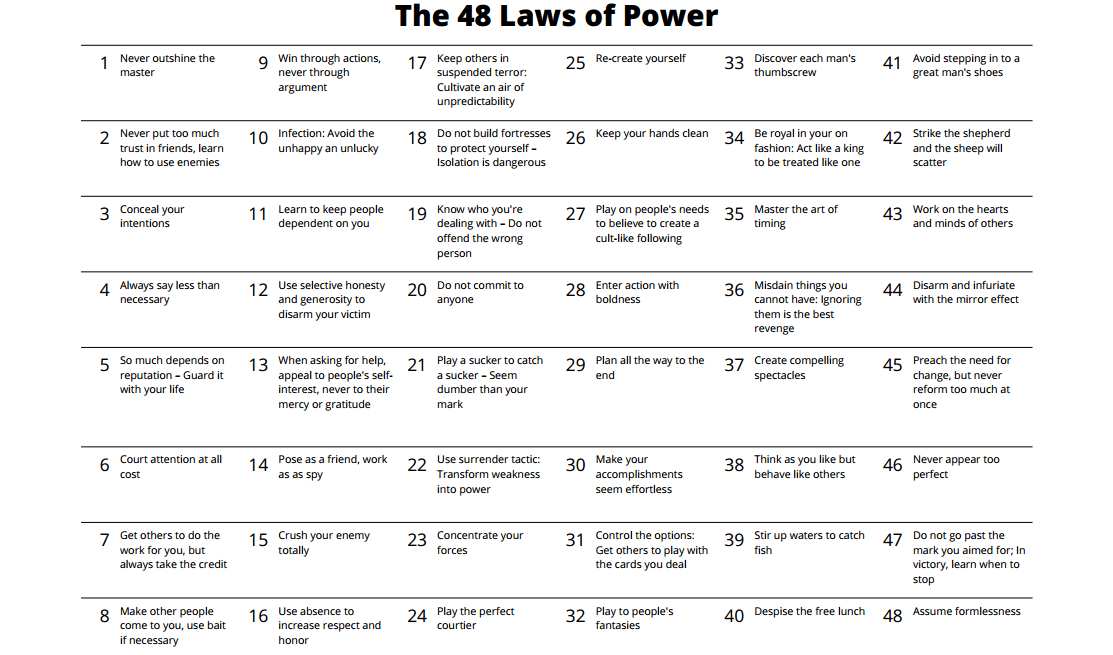
    Here is a full list of all of the laws
    48 Laws of Power

    Some of my favorite laws that I would like to highlight:

    • Law #1: Never Outshine Your Master – This is one that I struggled with early in my career as a young, hard-working, know-it-all millennial. I often privately criticised my managers and felt that I could do a better job than them. What I needed to realize is that by building them up, they would bring me with them and whether or not they knew I disliked their work, being against them would ensure they kept me down.
    • Law #4: Always Say Less than Necessary – As someone who likes to talk and feels that I have a lot of insight to offer, this law was a realization for me that often I can say more by speaking less. As someone who is also often frustrated with people being vague and not providing enough information, this gave me some clarity behind why they might be doing that and a better approach as to how to deal with it.
    • Law #9: Win Through Your Actions, Never Through Argument – Building off law #4, the best way to get someone to agree with you is not through your rhetoric or reasoning but instead your demonstrations. As someone who enjoys a good debate, I realized that for others that I was engaging with, even if I won them over, they often harbored negative feelings over the long run.
    • Law #13: When Asking for Help, Appeal to People’s Self Interest, Never to Their Mercy or Gratitude – This is a good lesson in empathy, most good-natured people are willing to help you but often they won’t make it a priority and this can lead to frustration on both sides. By finding ways in which both parties can benefit, things will often get done more quickly and with a better sense of collaboration.
    • Law #22: Use the Surrender Tactic: Transform Weakness into Power – Sometimes you have to be smart enough to recognize an un-winnable situation and in these cases, giving yourself time to recover, while also removing the satisfaction of victory from the other party will prove more effective in the long run.
    • Law #28: Enter Action with Boldness – Once you have made up your mind, commit to that decision and don’t look back, often a bias for action will lead you somewhere ahead of where you were. Additionally having doubts and second-guessing will often lead to hesitation and missteps.
    • Law #30: Make Your Accomplishments Seem Effortless – Telling people how hard you have worked on something, or the time and effort spent to accomplish a task only degrades the final product of your results.
    • Law #36: Disdain Things You Cannot Have: Ignoring them is the Best Revenge – So much time, energy, and thoughts are wasted on people and things that ultimately amount to nothing. We hold out hope that something will change to increase our favor when we are likely best served to forget about it and move on. Additionally, people often treat us less when they know they are desired, yet when they are not given that satisfaction, they seek to regain our interest.
    • Law #45: Preach the Need for Change, but Never Reform Too Much At Once – As someone who often tries to be the agent of change, it is important to understand that people are creatures of habit and too much change can lead to discomfort and ill-will towards you.
    • Law #46: Never Appear Too Perfect: People always like to root for the underdog and often a little humility or authenticity can go a long way in building trust. My favorite line from this law: “Envy creates silent armies”, think Regina George from Mean Girls.

    I have found myself recommending this book more often recently to friends who recently started in new roles and are navigating existing bureaucracies. When interacting with new people and relationships, it is easy to get caught up in why a person might be acting a certain way or doing something that we feel is against us. While they may or not be doing it intentionally, this whole process can result in a lot of wasted thoughts and having a simple explanation and/or solution to provide your own rationale can help to avoid this thinking or come up with a way to deal with it.

    If you have read this book or have questions or comments, please leave a note on this post.

  • My Favorite Books – Lila, an Inquiry into Morals

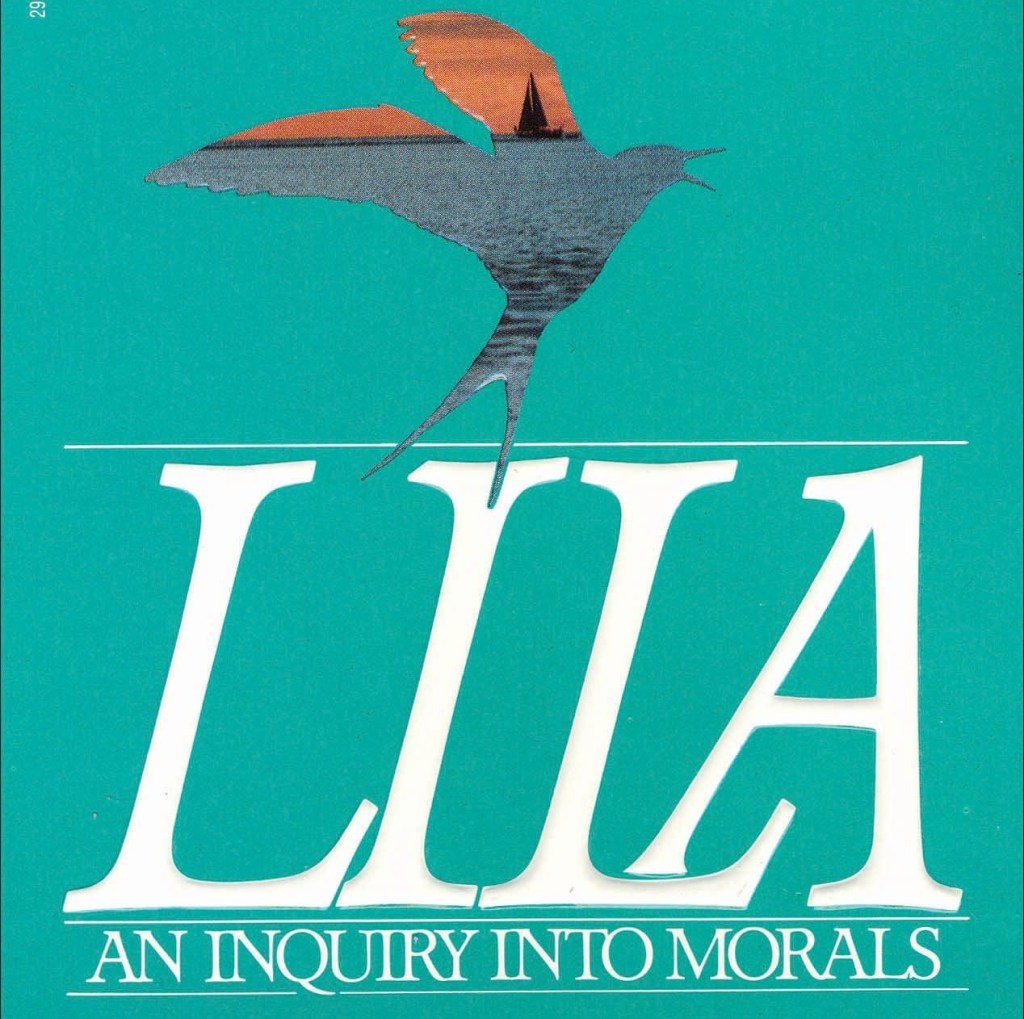
    My Favorite Books – Lila, an Inquiry into Morals

    By Robert Pirsig
    Published: 1991

    I remember being almost 200 pages into this book and thinking about not finishing it. I had no idea what was going on and the style switched between the narrator’s inner voice (which up to this point had just been ramblings) and his description of the events happening to him. Over the next 200 pages, I remember putting the book down in amazement and thinking to myself “Wow… amazing… this is probably the best book I have ever read.”

    Following up from his first book, The Zen and The Art of Motorcycle Maintenance, in which Pirsig concludes that quality cannot be defined. Lila is a semi-autobiographical story from the author attempting to answer this question as he travels by boat from New York to Florida. He picks up a young, attractive, and confused woman, named Lila which he uses as a metaphor for his framework to define quality.

    The Metaphysics of Quality (MOQ)

    First, he distinguishes quality into two main categories: static quality, which is long lasting and governing characteristics that bring order and predictability and dynamic quality, which are new ideas and out-of-the-box thinking, think of a new song that get stuck in our head, at first we listen repeatedly but over time the luster wears off. These two exist in contrast with one another, without dynamic quality, society cannot grow, but without static quality, it can not last.

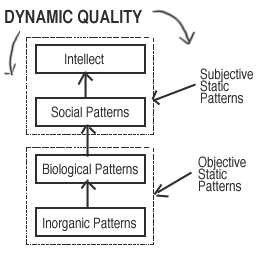
    Pirsig then dives deeper into static quality and provides a hierarchy that has helped to shape my understanding of why something is good and more clearly define what or why I like a certain thing, idea, or person. There are four elements within this hierarchy that build off one another and ultimately might rule out the other. In order from the bottom to the top:

    • Inorganic (physical/matter): Laws of nature, in the case of Pirsig’s passenger, Lila, it is his male instinct that attracts him to someone of the opposite sex. In the case of a dish of food, it is our primal instinct that drives us to want to eat.
    • Biological (life/nature): Desires built from our primal instincts often selfish in the form of lust, sex, power, etc. In the case of Lila, she has biological quality (she is attractive). This is also why we choose to eat certain things that might not be good for us or we know we shouldn’t.
    • Social (patterns) (human/society): Ideas that govern groups of beings and or collective culturally accepted norms. This is where Lila begins to fall short as someone who has been cast out by society. In our everyday lives, we are often driven to liking something because of the herd mentality.
    • Intellectual (mental): This is the pursuit for knowledge/truth and overall the quality of ideas. This is where Lila (like some girls that I have unsuccessfully dated) falls completely short, she is young and still has lots to learn. To me, this can also be specific to individuals, someone might have a lot of intellectual quality but it is nothing I am interested in nor can I relate to it. In a relationship, this type of quality often takes the longest to uncover but is the most important aspect of a relationship because this is where most of the time is actually spent. This could be a person, a job, or a hobby; I might be biologically attracted to the idea and society might validate it as a good thing but if it is not interesting to me, it will be difficult for me to invest a lot of time in it.

    MOQ explained

    These four categories are exhaustive and everything that exists can be classified into one of these categories, that is except for dynamic quality, which also often trumps the four when it comes to identifying quality. This makes sense because there are often things that we like, yet can’t explain why except that it is new or fresh. This also gives an explanation of the idea of “grass being greener on the other side”.

    This framework has served me well since finishing the book to help me understand why I like something and to give weight to my decisions. Whether it is a new relationship or a new job, I am often acknowledging the dynamic quality while also pursuing the intellectual quality (giving credence to the subordinate levels of quality as well).

    I highly recommend reading this book, if you’re looking for a longer synopsis, this answer on Quora is a great overview: What is Robert Pirsig’s book, Lila, about?

    I did eventually go back and read the prequel, Zen and The Art of Motorcycle Maintenance, which I also recommend. I have long been stumped on which might be better to read first. I probably would have enjoyed the first 200 pages of Lila more had I been familiar with Pirsig’s style, however, if you are only going to read one, definitely read Lila.